
Originally Posted March 21, 2024
Give a man a book, you entertain him for a night. Teach a man to write, you give him crippling self-doubt for life. – Andy Weir
I’ve been thinking a lot lately about my qualities as a writer. Andy Weir’s statement has a deep resonance with me. It is difficult to step outside yourself enough to appreciate the quality of your writing. Getting other people to read my work in a busy world is half the battle. I’ve had my writing described as “deep,“ “thoughtful,“ “too negative,“ and many other things. However, my greatest critic is myself as I struggle to get my points across as a writer, photographer, and visual communicator.
I consider writing an artistic process, not a technical exercise. In some ways, it both competes with, and complements, my work as a photographer. I must be in the mood to write. There are certain times of the day where I write well and other times of the day where I’m better off doing other things. I only seem to have enough in the creative tank to focus on one at a time. That’s not entirely true, but my writing output negatively correlates with my photographic output.
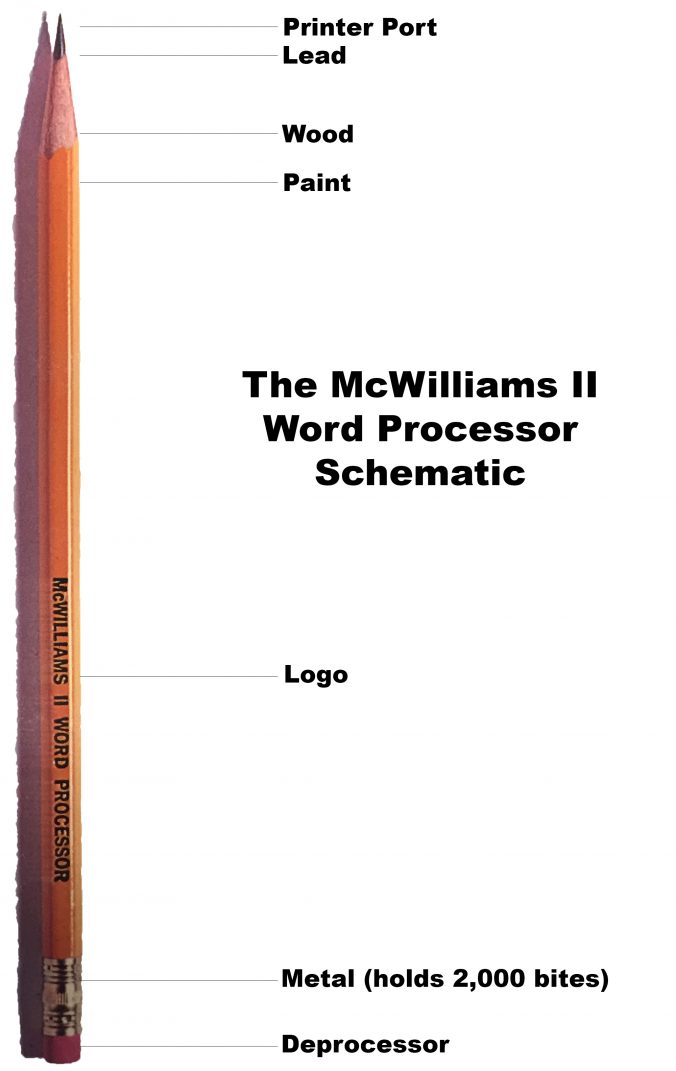
Over the last year, I’ve been playing with AI to realize both my visual and textual ideas. The impact of technology on my writing has increased over the years. I’ve written extensively about how word processing shaped my writing in the early years.
Since then, however, I’ve gone from using a spellchecker to grammar checkers to style checkers. My book, Discovering Digital Humanity, was copy edited using ProWritingAid as I did not have the funds to hire a human editor. That program also subtly changed the way I write by making me more self-aware as a writer.
Generative AI has taken the automation involved in my writing to a whole new level. I started out using it to create drafts for blogs to break bouts of writer’s block. Over the last year, however, I’ve experimented with several techniques that shape the writing itself. The results have been a mixed bag.
I started out trying to improve the criticism that my ideas were too hard to follow in text. I asked ChatGPT to rewrite blogs and other materials to appeal to a higher Flesch reading ease score. The raw result was often misleading.
However, by putting it side to side with my original text, I could edit the original to make it more approachable. At least that’s what I think I was doing. As with every writer, I think I’m making perfect sense and struggle to understand why others struggle with my text. That’s where that crippling self-doubt comes into play for me.
After these experiments, I asked ChatGPT to alter the tone of my arguments and make them more positive. The result was a bit more useful and figured heavily into the writing of a blog I published about a month ago, called “In the Beginning.”
I’ve also learned that I can feed my blogs and other writing into ChatGPT and have it summarize my arguments. If the summary aligns with my intent, I at least know that another filter understands what I’m trying to say (helping with my “crippling self-doubt”). This was a useful check, but it didn’t really change my writing style very much.
Writing itself is a technology for communicating thoughts and ideas. The technical means by which we produce it have always acted as an intermediary between the communicator and the receiver.
Text requires literacy to appreciate. Literacy is a variable, not a constant. This factor is crucial to whether the reader understands what I’m trying to say.
If I use Generative AI to make my writing more understandable, is it still my writing? If I ask a Generative AI to write a letter or blog for me, I think it’s clear that unedited those are not my words. But are they my ideas?
This blog started using an AI because I dictated it into my phone as I walked. The words are all mine, but they’re often garbled and require editing after the fact. But the ideas were in my head at that moment.
But what if I run it through ChatGPT to make it more understandable or organized? Is that still mine? Is this only controversial because we haven’t worked our way through it yet? Even grammar and spelling checkers are making judgment calls. With language, humans are also always making judgment calls. For instance, there is the endless debate over the Oxford comma (pro tip: you can’t write the word “comma” while dictating). So, is it illegal to use a grammar checker?
Plagiarism inevitably comes up in this context. We don’t know where many of the generative AI tools get their raw materials from. They mash it up just like humans do.
The ideas in this blog also come from dozens of teachers, books and articles I’ve read over the years, many of which I have forgotten, but whose ideas I’ve internalized while forgetting their original source.
This blog would not be possible without the thinking of McLuhan, Foucault, Engelbart, Nelson, and many, many others. One reason that I’m wanting an AI tool like a Generative Augmented Perspective is to make a map of where my ideas come from.
I started this blog out musing whether my writing was truly mine. I must balance that out against the reality that no one’s writing is truly theirs because many teachers, both alive and dead, have influenced it over the years. Am I teaching the AI to replace me as a writer? Is my thinking replacing any of the thinkers I referenced above? It is not.
I can’t see AI replacing our thinking. I am a different writer because of technology, but so was Shakespeare. The idea of writing downplays for publication was as revolutionary as his prose. This hasn’t changed.
Writing is always going to be hard, but that’s because thinking is always going to be hard. Writing that doesn’t require thinking is a technical exercise. AI can replace that. But if AI helps me think and communicate what I’m thinking and gives others fuel for their own thinking and creativity, that’s useful.
Generative AI’s impact on human writing might represent a shift of the magnitude of Gutenberg’s press. Everybody seems to be worried about AI replacing human thought. I’m excited to see where it takes human thought.
- The first draft of this blog was 1580 words.
- The final draft of this is 1085 words
- I’ve used the following filters: Siri dictation, Google Grammar, MS Word Grammar, and ProWritingAid
0 Comments
1 Pingback