Originally Posted May 13, 2024
“It’s the questions we can’t answer that teach us the most. They teach us how to think. If you give a man an answer, all he gains is a little fact. But give him a question and he’ll look for his own answers.” – Patrick Rothfuss
Most of us suffer from a crisis of seeing. What we can’t see, we believe we know, and that’s a problem. We need better tools for seeing, not knowing, and yet that’s what we insist on trying to turn our latest AI tools into. They don’t do that very well unless accompanied by a lot of critical seeing.
We often forget that scientific progress is based on seeing, not knowing. The scientific method always questions what we know and seeks to reconcile that with what we see. Yet we expect science to knowbecause it brought us so much knowledge.
Humans want certainty, an end to the pathway. However, any scientist worth his or her salt will quickly disabuse us of the notion that we know everything. That is because knowledge is a process of constant discovery.
However, we look to our tools for knowledge, not seeing. When we pick up a book (a tool), it’s ostensibly to gain knowledge. When we read a blog or a website (also tools), we’re doing the same. They may be connected to other containers, but those connections are often hard to perceive (a complaint about the internet shared by Tim Berners-Lee and Ted Nelson). The same is true of AI Chatbots. They’re making lots of connections behind the scenes, but we can’t see them. Seeing requires connection.
Seeing beyond the boxes of knowledge that books and website represent requires a great deal of education and practice. Most learners never get to this level and, until they do, they don’t accept that all knowledge is contextual and connected.
I tell my students that there are no right answers in my class, but there are wrong ones. This is to encourage them to explore and create, but to base that on solid foundations. I want them to explore connections, not given “facts.”
They resist this because they want to know the “right” way to do it. This is a direct product of a “learning” system has trained them to fear failure above all. You can’t see without failing.
As an author, I recognize that there are a multitude of compromises necessary to smash any set of ideas into a book, or any other textual format. When we teach the book, we rarely acknowledge what’s going on beyond the covers.
That’s because it’s hard to see those connections. You can follow citations, but that takes a lot of extra work and even they don’t fully capture the imagination of the author.
As a teacher, I recognize how hard it is to get the students to read the book in front of them, much less to acknowledge the vast number of books that exist around that book. Books risk tunnelling our vision because of how they work as narrative containers.
The tension between creativity and conformity is something that our systems of learning struggle with. I remember a conversation with my daughter’s 5th grade math teacher about a particular practice question that my daughter got “wrong.” I pointed out that the assignment worded the question badly and that there were multiple answers to it.
The teacher agreed with me that the question was problematic, but argued that there were problematic test questions on the standardized test that had to be accepted as correct because that was all that the assessment permitted. What you saw (or deduced) didn’t matter. The test itself was the knowledge that mattered and you didn’t want to “fail” that.
Part of being a good thinker is accepting uncertainty. Part of growing up is recognizing that there are many things left to be discovered. Certainty closes that door.
We equate knowledge with certainty because that’s how we learned. This is a fallacy and a corruption of what it means to be “knowledgeable.”
This corruption lies at the center of many of our struggles today. We go around expecting certainty. People wanted certainty during the pandemic, but all legitimate science could give us was a set of probabilities. The same conundrum exists as we struggle to confront the complexity of climate change. There is no certainty there, only probabilities.
However, humans crave clear narratives. Even if they are false, they provide patterns in a complex and uncertain world.
Science has moved past that. Since the discovery of first relativity and then quantum physics over a century ago, science and math realized the world does not work like Newtonian clockwork.
Observations can fool us, and we are continuously searching for better explanations. However, our quest for certainty compels us to insert mysticism where science is still searching for answers. That doesn’t mean the answers are not out there. It just means we haven’t understood them yet.
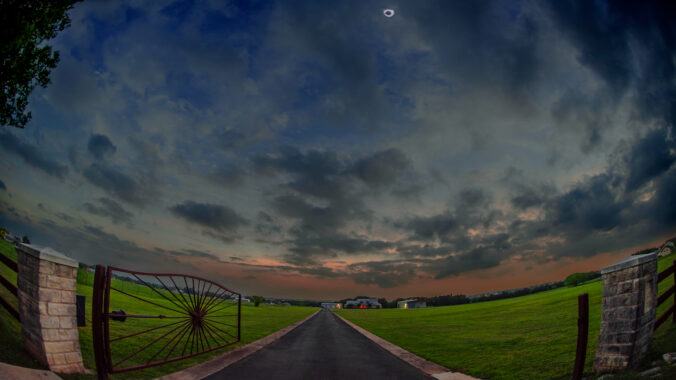
We couldn’t explain eclipses for much of human history and assigned to them a mystical value because we sought to clear up the uncertainty they aroused. Quantum physics is no different. We are equally wrong to associate it with the certainty of a belief structure to explain it.
With the flood of information we’ve unleashed through the digital revolution, our cloistered informational existences are constantly challenged. As we quest for certainty, these disconnects become ever more apparent and uncomfortable to us.
We lack the tools to see information clearly when one “definitive“ narrative conflicts with another. The current crop of generative AI tools doesn’t get there.
Asking a chatbot for difficult perspectives often triggers a host of “guardrails” to keep us from exploring uncomfortable subjects. AI companies think these guardrails are necessary because we accept their products’ answers as being “given knowledge,” not a synthesis of human conversations online.
AI Chatbots blind us to context. This is not seeing.
Generative AI reflects on us as much as anything the models are doing. Their outputs are the product of trying to create linear narratives out of a profoundly nonlinear observation. We struggle with the chaos of human existence, perceptions of systems of thought, and governance. If we build a tool that merely reflects our “knowledge” we should not be surprised if it reflects that blindness back onto us, garbage-in, garbage-out.
Our quest to know has blinded us to the possibilities of seeing. We need better tools to contextualize our ideas. As teachers, we need to teach the skills of navigating complexity rather than the skill of producing certainty. We must highlight what we don’t know as much as what we do.
New tools for thinking are necessary to facilitate this process. Books are wonderful tools for knowledge and are essential for seeing, but they have limitations as tools for perceiving the world. They can be hard tools to master. Chatbot tools merely reflect this struggle.
Like every tool, we should use them for what they are best at. However, we must look for augmented tools to help us see the world differently (and this includes the analysis of our narratives themselves). AI could provide those tools for us, but only if we design tools to take advantage of its ability to see differently rather than “know” more than us.