Originally Posted February 12, 2024
Life is an ongoing journey to unravel the complexities of the world. Despite the increasing intricacies, we persistently seek anchors and waypoints to navigate through it all. In today’s technologically driven era, we find ourselves inundated with vast amounts of information and choices, which can sometimes overwhelm us.
It takes a certain humility to admit that the more you know, the less you know, you know. Toddlers have an enviable certainty about the way the world works. Most of us recognize over time that our imaginations inherently limit our ability to understand and process. Our imaginations are simultaneously the outlet that gives us art, which is an imagining of a more ordered state of the world.
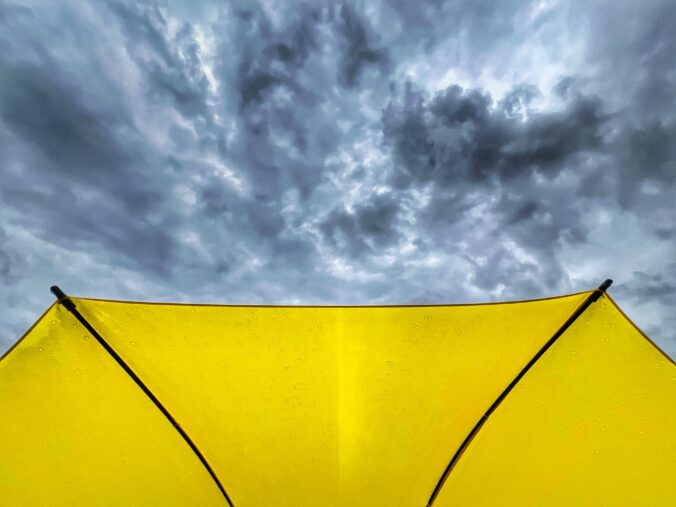
Having dedicated over four decades pursuing the photographic art, I’m intimately familiar with this struggle. While most art requires addition, photography requires subtraction. It is about ordering the world in a frame. It is about taking a three-dimensional world and transforming it into a two-dimensional one. The art of photography is a process of simplification.
Good photographers recognize how to make sense out of a complex world. Photography is the constant battle to refine images that resonate with us and our audiences emotionally and intellectually.
I employ similar techniques when delving into the realms of politics, technology, or history. As an educator, I struggle to teach the need to confront the complex and make sense of it to my students, who exude a youthful confidence in their understanding of the world. They know little. Therefore, they think they know a lot.
In the realm of technology, we see a perpetual tug-of-war between complexity and understanding. There is a difference between perceiving simplicity and inventing it, however.
Some pundits maintain AI is merely an enhancement of what currently we use. Others see it as an existential threat to humanity. Both viewpoints stem from a desire to grapple with complexity. Yet, nestled between these two extremes lies a middle ground, where simplicity can offer us a guide to exploration rather than dismissal or fear.
Large language models, such as AI, neither operate through sheer simplicity nor magic. Instead, they offer a means of simplifying the intricate fabric of our technological landscape.
Simplification, like composing a captivating photograph, involves removing noise, drawing connections, and discerning patterns. AI can provide us with a critical tool in creating understandable patterns from the noise. It is not the technology itself; it is what the technology does that should fascinate and inspire us.
I get impatient with those who would wield complexity as a tool for dominance. For instance, I find little attraction in the obsession over equipment in the photography space. Gear is a distraction from the truly difficult task of artistic vision. Similarly, in the realm of technology, our aim should be to demystify rather than obfuscate.
Complex technology is a necessary evil, not an end. We must always strive to simplify our tools as much as possible. Our tasks are inherently complex and addressing those should be the focus of our efforts, not the tools necessary to get there.
My focus as a technologist lies not on the technology itself but in its potential applications. How can it enrich creativity? How can it facilitate learning and knowledge-sharing? Those are hard enough without adding overly complex technology on top of them.
Approaching AI with a similar mindset, I view it as a catalyst for simplification—a mechanism to illuminate the intricacies of our world. However, context is paramount.
Every piece of knowledge requires a framework, just as every photograph requires a frame. AI could construct those frameworks for us, allowing us to perceive patterns of knowledge more quickly.
The economist E.F. Schumacher once wrote, “Any intelligent fool can make things bigger, more complex, and more violent. It takes a touch of genius — and a lot of courage — to move in the opposite direction.” I would add to this insight and say genius is about exploring the edges of complexity and creating simple, yet dynamic, and evolving visions of reality.
AI, while promising in its ability to simplify, is not immune to pitfalls. Hidden complexities breed biases and manipulation, often with an underlying profit motive. Ignorance has always been a component of capitalist growth. Transparency is therefore imperative, enabling users to comprehend the processes underlying all technological systems, particularly AI algorithms.
I need AI to simplify the world for me. I need pictures I can explore with my mind and my eyes. I want to know where those pictures came from and how they what went into constructing them. That is itself a picture of connections and causalities.
In my quest for understanding, I hold books and AI to similar standards for providing pathways for further exploration, such as connections to sources and related maps of information. This requires clear evidence and transparency.
No one book or AI query can provide a complete map, even if they are transparent. Transparency itself is necessary to simplify our pathways through information.
I always strive to be a simplifier—a superpower laboriously honed through years of distilling complexity. Instead of viewing AI as a threat, I see it as a complementary tool—an enhancer of our innate ability to simplify and understand.
AI could provide a powerful new tool in our quest for simplification. However, that will require careful design and a focus on that goal, not the complexity of the tool. I haven’t been this excited about the potential for this tool to expand our horizons and wisdom in a long time.
This is the time to advocate for open systems of understanding, both of and by the tools we create. AI could do both and provide us with a simple view of the complex world we all confront so that we can get on with the process of being human, not just statistics on an industrial scale.
I leave you with this quote from a BBC report on Word Processors from the dawn of the personal computing revolution (1979) which I think also speaks to our current moment in AI:
“If we do it all wrong, then it could be an absolute disaster. It’s the biggest aid to totalitarianism you could ever come across if you think about it and that must be avoided at all costs. On the other hand, it’s the greatest boon to decentralization and people fulfilling themselves and that’s sort of the way we’ve got to go, but it’s up to us. Being an optimist, I’m quite excited.”
— SOURCE: BBC, 1979 report on “Word Processors” at https://youtu.be/b6URa-PTqfA